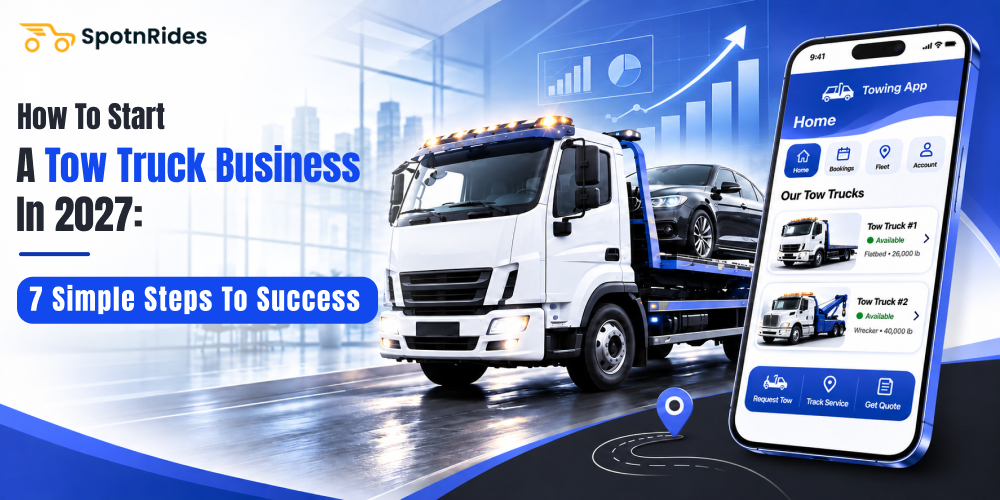
How to Start a Tow Truck Business: 7 Simple Steps to Success
Starting a tow truck business looks like a simple process. The real challenge starts here. You need the right service mix, local permits, reliable staff, and an effective way to manage service requests. However, starting a towing company involves something more than purchasing a truck and hiring reliable drivers. You need a clear business plan, proper licenses, suitable equipment, reliable staff, and an effective way to manage service requests.
In this business, technology also plays an important role in building a competitive towing business. A dedicated tow truck booking app can help you manage customers, drivers, and daily operations.
If you have a business plan and have a question on how to start a tow truck business, then this blog is for you. Explore the 7 essential steps to start and grow a successful towing business.
7 Essential Steps to Start a Tow Truck Business
Here are the steps provided to start your own tow truck business.
1. Research the Market and Identify Your Towing Services
Before starting a towing business, there are a few steps to follow. First, understand the demand and competition in your location. Research existing towing companies, what services they provide, their pricing structure, response time, and customer reviews. Identify the customer segments you want to serve. Next, decide what service you provide. Some of the common options are towing, roadside assistance, accident recovery, motorcycle towing, and vehicle transportation.
2. Create a Business Plan and Estimate Startup Costs
A right and clear business plan gives your towing company a perfect direction to success. It should explain your business model, target customers, service offerings, operating area, financial requirements, and expansion strategy. Prepare a realistic startup budget covering:
- Tow truck purchase or financing.
- Business registration and permits.
- Commercial vehicle insurance.
- Towing equipment and safety gear.
- Driver salaries and training.
- Fuel and vehicle maintenance.
- Office, parking, and storage expenses.
- Software and technology investment.
Also, identify how your company should make money. You can either charge customers based on towing distance, service type, vehicle category, and additional roadside assistance requirements. A well-planned budget helps you avoid financial pressure during the initial stages.
3. Obtain the Necessary Licenses, Permits, and Insurance
Before accepting towing requests, ensure you meet all the necessary legal compliance. Licensing and permit requirements vary depending on the region, country, and state. Check with the appropriate local authorities to understand the requirements for business registration, towing permits, and storage facilities. Depending on the operations of your business, you may also need to review the federal motor carrier regulations. Insurance is another important requirement; consider the following coverage:
- Commercial auto liability insurance.
- General liability insurance.
- Physical damage coverage.
- Garagekeepers liability insurance.
- Workers’ compensation insurance.
4. Choose the Business Model
Choose the business model, whether you are going to purchase the vehicle and all the necessary equipment and provide the service to customers, or build a platform connecting various service providers with the customers for instant request handling and generating revenue from it. Both models are the best choice for startups looking to enter the tow truck business. Choose the business model based on your budget. If you don’t want to purchase the vehicle and requirements but still have interest in starting a tow truck business, then building a tow truck app to connect providers and customers is the best choice.
5. Identify the Towing Services You Want to Offer
After you gain knowledge of your target market, you will have to determine which towing and roadside assistance services you wish to offer. The services you offer should be driven by the needs, demand, and availability of local customers and towing companies with the expertise you’re looking for in your network.
Some of the popular towing services that you can include are:
Emergency Towing: Relocate vehicles that are down or can no longer be driven.
Accident Recovery: Organize vehicle recovery for vehicles in road accidents.
Roadside Assistance: Service for flat tires, batteries, and fuel failures as well as other roadside emergencies.
Flatbed Towing: Move luxury, damaged vehicles or those with low clearance.
Motorcycle Towing: Offer specialized transportation for motorcycles and scooters.
Heavy Duty Towing: Carry out towing duty for buses, trucks, commercial vehicles, and other heavy-duty machinery.
Long-Distance Vehicle Transportation: Help customers transport vehicles between cities or locations.
6. Build a Reliable Network of Towing Operators
Once you’ve determined which services you’ll provide, concentrate on creating a network of dependable towing businesses that will be available to customer needs. The speed and quality of these service requests are vital to your business reputation.
Some of the key things to keep in mind when creating your operator network are:
- Reach out to independent towing companies and experienced drivers who are available in your desired areas.
- Review their driving licences, registration, insurance, and other relevant paperwork before employment.
- Get mobile services to cover a wide area: Work with operators in other areas around the country to provide towing services when needed without restricting services to just one area.
- Determine the service charges, distance pricing, and payment conditions with your partners.
- Track response time, customer feedback, service completion, and operator performance to ensure service quality.
- A dependable network allows you to service more calls, cover a wider area, and meet various customer needs without having to run all the towing equipment.
7. Invest in Tow Truck App Development to Manage Your Business
Running a towing company isn’t just about attracting business and getting to work with good operators. Service requests need to be managed efficiently, drivers need to be assigned, services in progress need to be tracked and daily service operations need to be monitored. With a dedicated tow truck application solution, you can centralize these activities and see them all through one approach. The right and latest technology can help you communicate with customers in proximity to the tow companies and operate your business much more effectively.
These are the key elements of a tow truck app:
Customer App
Make your towing services available via a mobile app. They are able to choose the service, provide pick-up and drop-off addresses, ask for towing services, get towed by a crew member, and pay.
Driver App
Deliver a specific app to towing companies to submit & accept/deny bookings, locate customer service, mark job statuses, track their income and more.
Admin Dashboard
Provide business owners with full management control of platform. They’re capable of handling customers, onboarding towing operators, tracking bookings, setting up fees, handling payments and observing business performance.
Epilogue
Starting a tow truck business requires careful planning, reliable towing partners, the right service offerings, and an efficient way to manage daily operations. As your business grows, relying on manual booking and dispatch processes can limit your ability to handle increasing customer demands. Investing in a dedicated tow truck app like honk can help you streamline bookings, coordinate towing operators, and manage your business through a single platform. With SpotnRides’ tow truck app development solution, you can turn your business idea into a branded digital towing platform and build a scalable business.
Take the next step toward launching and growing your towing business with SpotnRides!
FAQ
Yes, a tow truck business can be profitable with consistent service demand, competitive pricing, reliable towing partners, and efficient operations.
A tow truck app helps business owners manage customer bookings, connect with nearby towing operators, assign service requests, track ongoing jobs, and manage payments.
To start a tow truck business, you need a clear business plan, proper business registration, applicable licenses and insurance, a defined range of towing services, and a network of reliable towing operators.
About the author

Comments are closed.

